

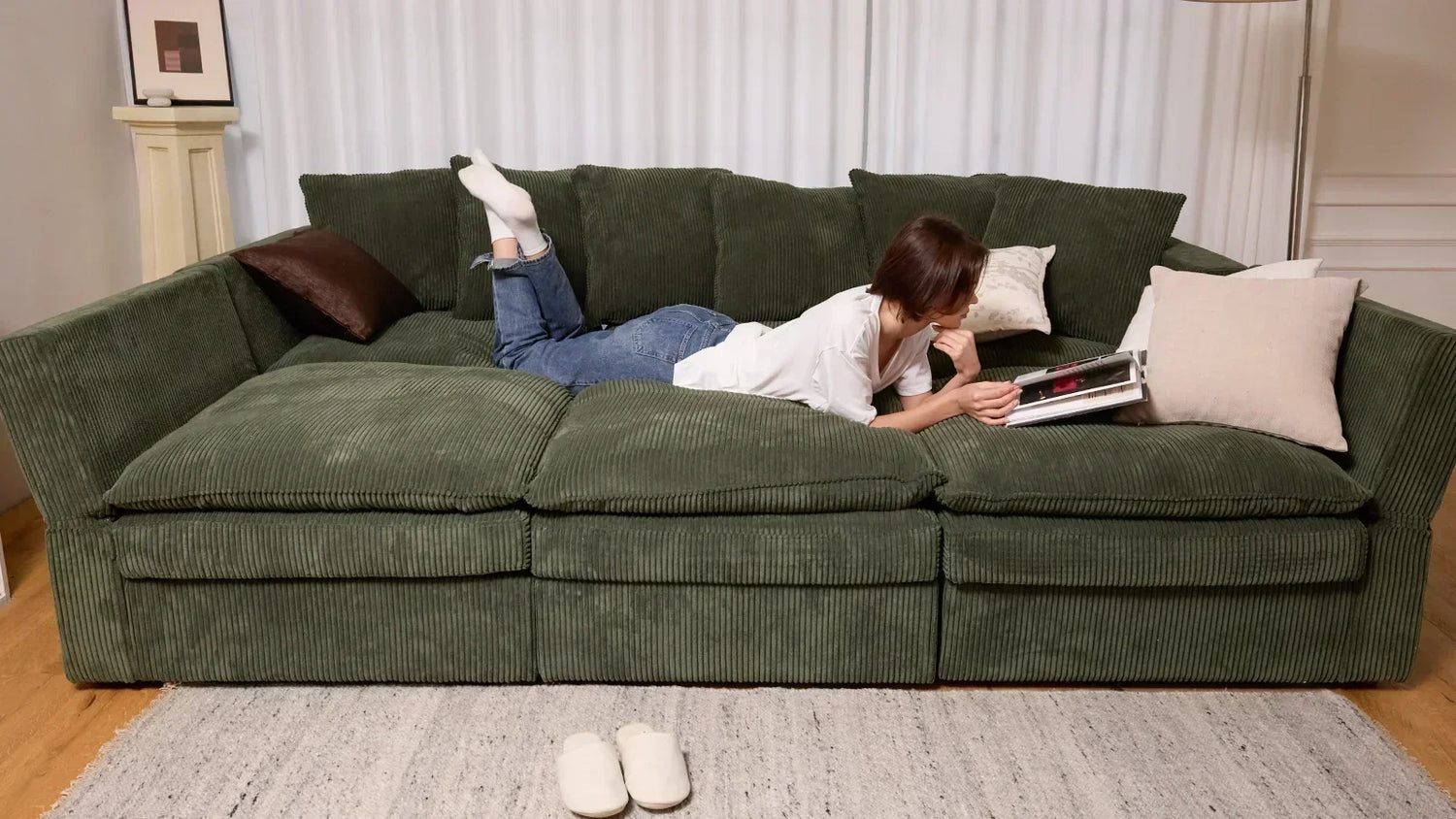
A modular sleeper sectional with storage is worth its footprint when the layout fits the room, the storage sits somewhere you'll actually reach for it, and the cover can handle daily wear. Getting those three right matters more than any single spec on the listing page.
What Separates One Sleeper Sectional From Another
Three things vary most between modular sleeper sectionals: how the modules arrange around the room, where the storage compartment sits, and how much upkeep the fabric needs. Everything else, arm style, leg height, cushion firmness, tends to matter less once those three are settled.
Modular construction is the detail that makes the other choices possible. Because the sectional is built from separate seat, corner, and storage modules rather than one fixed frame, the same set of pieces can often be rearranged into a different layout later, which isn't true of a fixed sectional bought as a single unit.
The Layout Comes Before the Feature List
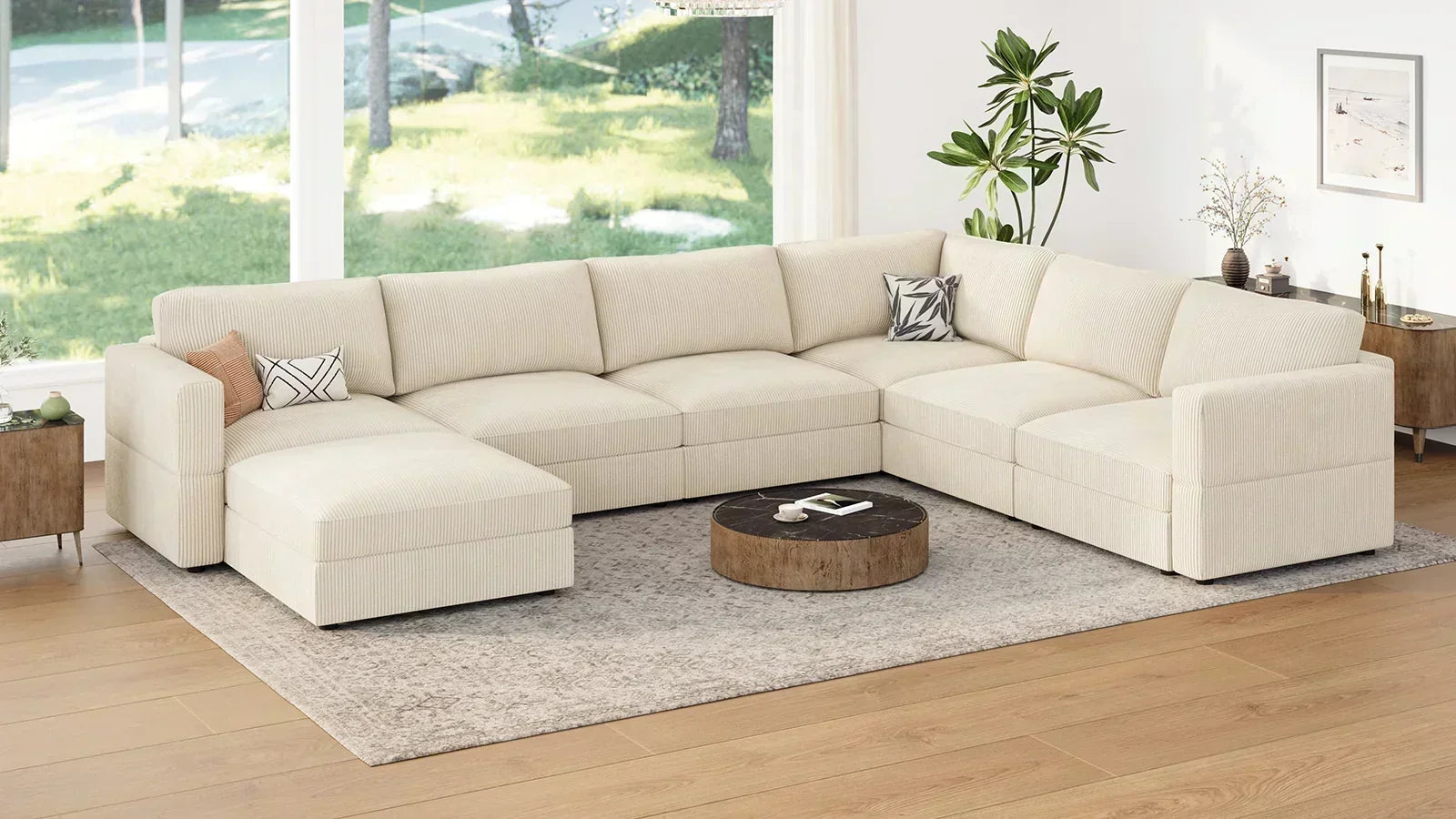
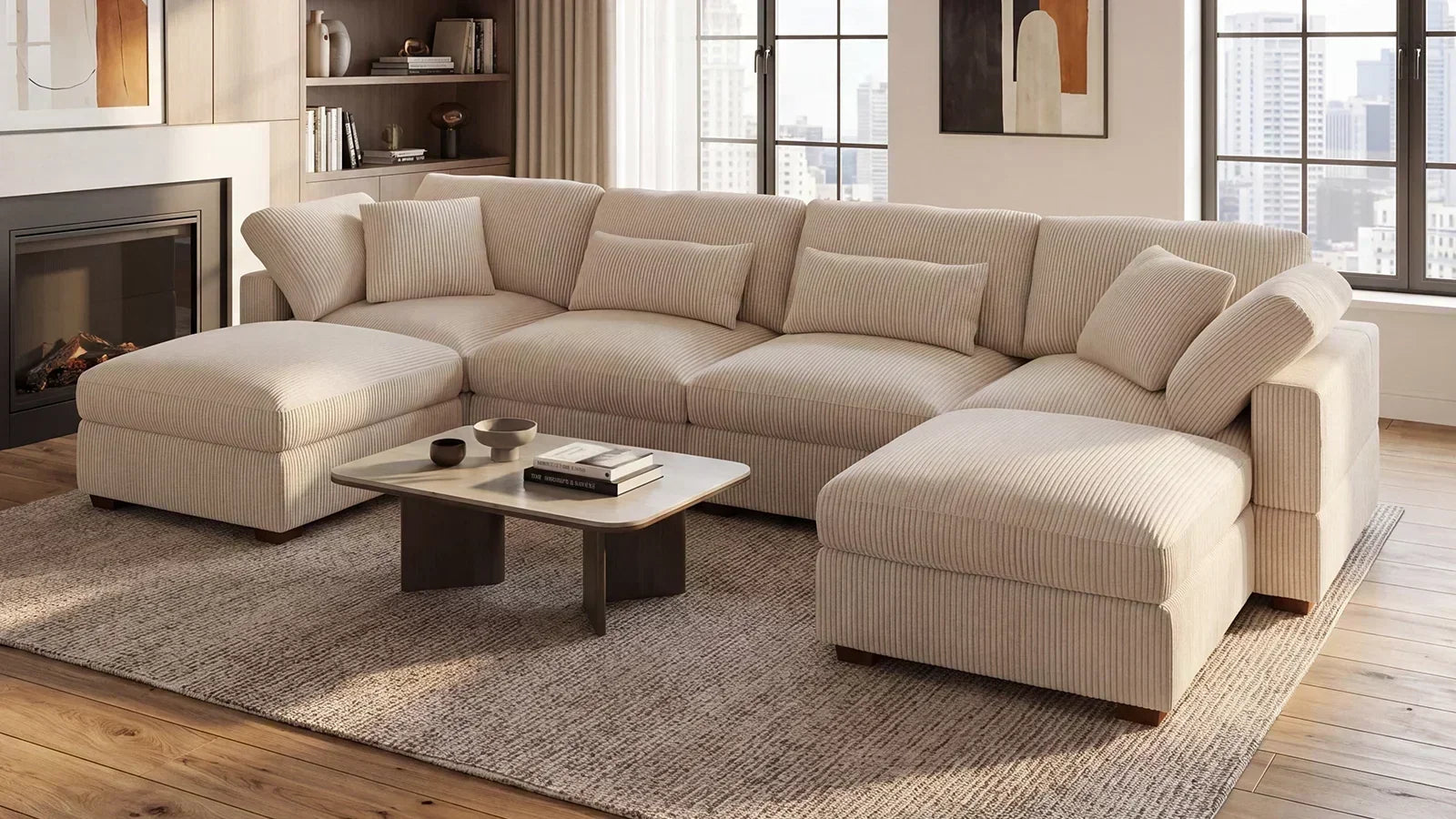
Room shape decides which configuration works before storage capacity or fabric choice enters the conversation. An L-shaped layout needs open floor space on two adjoining sides; a U-shaped layout needs it on two full sides at once, which rules it out for rooms where one side already backs against a doorway or a walkway.
A smaller room with an irregular layout usually does better with a compact configuration that can be nudged into a corner and reconfigured if the furniture plan changes. A larger, more open room can absorb a bigger U-shaped or oversized layout without the sectional dominating every sightline in the space.

Space Needed in Sofa and Bed Modes
Two footprints matter, not one: the sectional's closed dimensions and its footprint once the pull-out bed is unfolded. A sectional that fits neatly against a wall when closed can still crowd the room once the bed is open, so both numbers need to be checked against the space before ordering.
Plan for extra clearance beyond the foot of the open mattress, roughly two feet of walking space, so the bed is actually usable rather than something that technically unfolds but leaves no room to get in or out of it.

Where the Storage Sits and How It Opens
Storage location changes how often it gets used more than the raw volume inside does. A single seat cushion lifts to reveal a compact compartment suited to flat items like throws or remotes. A chaise base lifts to expose a larger space, usually the most volume of the three, good for bulkier items like spare pillows or a folded comforter. An ottoman lid opens the most conveniently since the ottoman itself can be repositioned closer to whoever needs it.
- Single seat: smallest capacity, easiest to access without disturbing anyone else seated nearby.
- Chaise: largest capacity in most configurations, but fixed in place.
- Ottoman: moderate capacity, most flexible in terms of where it ends up.
A fixed chaise rewards items that don't need frequent access, since reaching them means lifting a seat base that's often part of the everyday seating arrangement. An ottoman suits items pulled out weekly rather than a few times a year.

Fabric, Removable Covers, and Everyday Upkeep
Corduroy is the most common fabric on modular sleeper sectionals, and rib width affects both feel and cleaning more than it might seem. A wider wale reads plusher and hides crumbs and pet hair better between cleanings; a finer rib looks more tailored but shows surface dust and pressed-in wrinkles sooner.
Removable, washable covers matter more in households with kids or pets than in ones without either, since the difference shows up in how often stains actually get addressed rather than left to set in. Spot-cleaning works for occasional spills, but a cover that comes off and goes into the wash handles the kind of repeated mess that spot-cleaning alone won't keep up with.
The Right Match for Occasional or Frequent Guests
Hosting frequency should drive the decision more than the maximum feature count on any single listing. A household that hosts a few times a year gets most of its value from everyday seating and storage, with the sleeper function as a convenient backup rather than the main reason to buy.
A household that hosts often benefits from a configuration where the bed opens without a struggle and the storage compartment can hold a full set of bedding close by. In that case, storage capacity and how easily the bed unfolds carry more weight in the decision than they would for a household that rarely needs the sleeper function at all.
Match the Sectional to How the Room Actually Works
The right modular sleeper sectional with storage fits the room's layout in both sofa and bed mode, keeps storage somewhere it'll actually get used, and wears a cover the household can keep clean. Weigh those three against how often guests actually stay over before comparing any further on price or style.
FAQ about Modular Sleeper Sectional With Storage
Q1: What is a modular sleeper sectional?
It's a sectional sofa built from separate seat, corner, and storage modules rather than one fixed frame, with at least one module unfolding into a bed. Because the pieces are separate, the layout can often be rearranged later.
Q2: Are sleeper sectionals comfortable for everyday use?
Generally yes, since the sleeper mechanism sits under the seat cushions and doesn't affect daily seating comfort. Seat depth and cushion firmness, not the presence of a pull-out bed, are what determine how the sofa feels for regular use.
Q3: How long does a modular sleeper sectional typically hold up under daily use?
Most well-built configurations hold up for several years of regular use, though the pull-out mechanism and fabric cover tend to show wear before the frame itself does. How often the sleeper function is used, and whether the cover is cleaned regularly, affects that timeline more than the sofa's overall build quality.
Q4: Can the modules be rearranged after the sectional is already set up in a room?
In most cases, yes. Since the pieces connect rather than form one fixed unit, they can typically be separated and reassembled into a different layout if the room or the furniture plan changes later.
Q5: Is a modular sectional easier to move than a standard one-piece sectional?
Usually. Individual modules are smaller and lighter than a single fixed sectional frame, which makes them easier to carry through doorways and hallways and easier to reposition without needing to move the entire sofa at once.

Leave a comment
This site is protected by hCaptcha and the hCaptcha Privacy Policy and Terms of Service apply.