

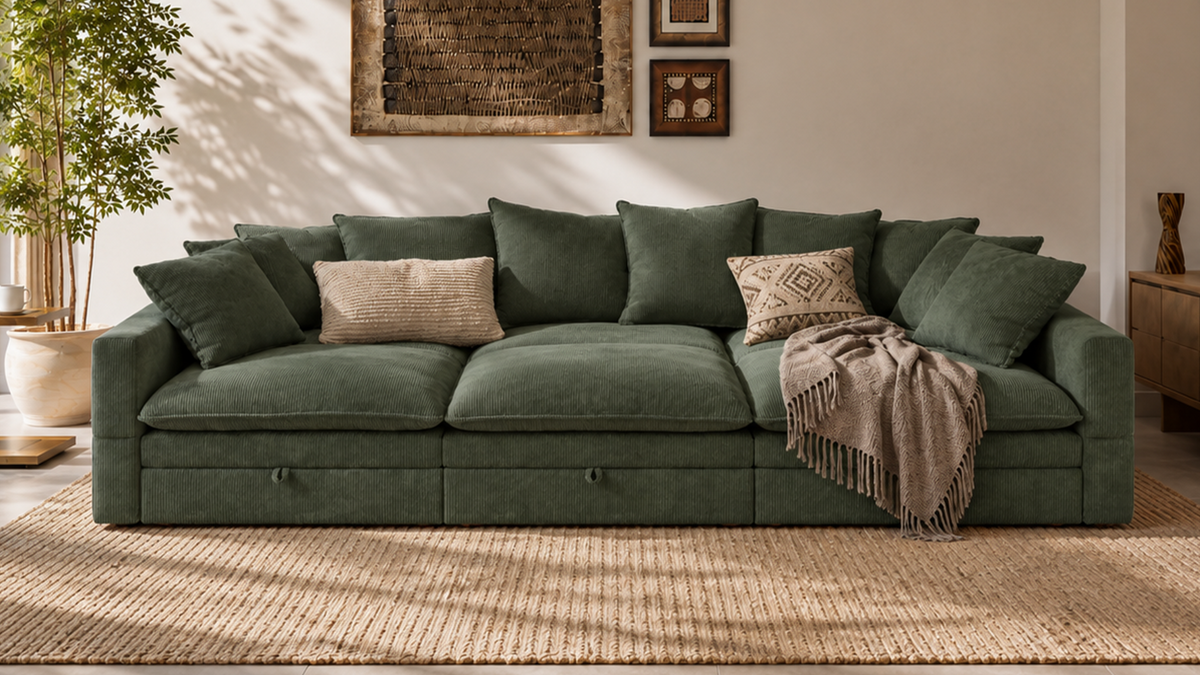
A modular sofa for pet owners should make daily cleanup manageable and give both people and animals room to settle in. Start with a tightly woven, easy-care fabric, confirm what each removable cover can safely handle, and choose a layout that does not turn one favorite pet spot into the whole sofa’s wear zone. A handsome fabric matters, but its care instructions matter more.
What Actually Matters When Pets Share the Sofa
The best pet-friendly modular sectional fits the routine you already have, not an ideal routine that depends on constant cleaning. A calm older dog, two shedding cats, and a large puppy that jumps on the cushions create different kinds of wear. Think through shedding, nails, muddy paws, odors, and how often your household eats or drinks on the sofa before comparing colors or silhouettes.
The Pet Habits That Create Real Wear
Start with the habit that happens most often. A cat that scratches at the same arm needs a surface with few loose threads and a nearby scratching post that offers a better target. A dog that returns from wet walks needs a practical landing routine before it reaches the cushions. Heavy shedders need upholstery whose color and texture do not make every strand look dramatic between vacuum sessions.

Look beyond the seat surface, too. Pet hair collects in cushion gaps, around low frames, and where sectional pieces meet. A configuration with reachable seams and movable sections is easier to vacuum thoroughly than a fixed, wall-to-wall shape. If your pet is older or small, a lower, stable seat can also be easier to climb onto than a tall cushion with a slippery front edge.
When comparing listings, check the care code, removable pieces, weave density, cushion gaps, and exposed corners before choosing color. This prevents a common disappointment: selecting a shade that hides hair, then discovering that the cover cannot be cleaned the way your household needs. The fabric decision comes next because it shapes how visible the everyday evidence of pet life becomes.
Fabric Choices That Resist Claws and Shedding
For most homes with pets, a tightly woven, low-texture fabric is the safer starting point because fewer loose loops give claws less to catch. No upholstery is claw-proof, and a fabric that survives one pet may show damage with another. The goal is to reduce snag risk, make hair easier to remove, and select a surface you can care for according to its label.
Tightly Woven Fabrics
Look for a smooth, dense weave rather than an open weave with visible loops. Flat woven polyester and other performance-oriented fabrics can be easier to vacuum than fabrics with deep texture, provided their care labels fit your cleaning routine. Examine product close-ups for loose yarns, pronounced loops, and decorative stitching on the front edge of seats, all of which can become claw targets.
Textured upholstery can still work, but it asks more from the household. Corduroy and similarly raised fabrics can hold hair in their ridges and show flattened areas where a pet sleeps. If you prefer texture, choose a manageable rib size, vacuum gently in the fabric’s direction, and expect more visible brushing between deeper cleans. Our corduroy sofa buying and care article explains why the care label should decide the cleaning method.

Removable Covers and How Much Cleanup They Save
Removable covers help because they separate a dirty surface from the cushion insert, but they only save time when their care instructions match the mess. A zippered cover is useful for vacuuming seams, spot cleaning, and occasional laundering when permitted. It does not mean every cover can go in a washing machine, dryer, or hot-water cycle.
Questions to Ask Before You Rely on a Zipper
Read the furniture listing and the sewn-in care label before you assume a cover is washable. Cleaning codes commonly indicate whether water-based or solvent-based products are appropriate, while some fabrics allow vacuuming only. Follow the label for the exact cover, because lining, backing, dyes, and seam construction can change what the fabric tolerates.
Confirm which pieces unzip, what cleaning method the label permits, whether replacement covers are available, and how the cover should dry. These details are more useful than a broad claim that a sofa is easy to clean. If only the back pillows unzip, a stained seat base may still require a different plan.

A Cleanup Routine That Limits Set-In Messes
Use a simple routine instead of saving everything for one large cleaning day. Vacuum hair from seats, gaps, and under cushions on a regular schedule. Blot a fresh spill with a clean, dry cloth rather than rubbing it deeper into the fibers. Then follow the care label before applying water, cleaner, heat, or a machine-wash cycle.
For muddy paws or a pet accident, remove as much surface soil as possible first and address the affected area promptly. Strong deodorizers or improvised mixtures can leave rings, change color, or damage backing on the wrong fabric. If the label is unclear or the stain is extensive, professional upholstery cleaning may be the lower-risk option.
Configurations That Give Pets Their Own Space
A flexible sectional can reduce concentrated wear when its modules let you create a predictable pet zone. Instead of fighting for the center seat, give your pet a corner, chaise end, or ottoman-adjacent spot with a washable throw over it. This protects the most-used seat while keeping the pet close to the household.

A Defined Resting Zone
Place the pet zone away from the busiest entry path and from a sofa arm that invites jumping. A corner module can feel enclosed for a cat, while a chaise or wide ottoman may suit a dog that likes to stretch out. Use a dedicated blanket that is easy to remove for routine washing, but do not rely on it to prevent all hair, moisture, or claw damage.
The useful test is whether you can remove or replace the top layer without moving the whole sectional. Leave enough space around the sofa to reach the floor beneath it, and keep food and water bowls away from the sofa edge.

Signs a Sofa Will Not Hold Up to Daily Pet Use
Walk away from a sofa when the construction forces you to accept a cleaning routine you cannot realistically keep. An attractive listing can still be a poor fit if it has a loose looped weave, fixed cushions with hard-to-reach gaps, vague care information, or decorative details exactly where your pet lands and scratches.
Warning Signs in the Upholstery
Pause when the fabric description does not explain care limits, the close-up photos hide the weave, or the only cleaning claim is a vague promise of easy maintenance. Loose boucle-style loops, fringe, long pile, and highly raised decorative thread can be especially vulnerable to snagging. Very pale or very dark solid fabrics may also show high-contrast hair quickly if they are far from your pet’s coat color.
Check the edges of cushions and arms. Piping, thin trim, and raised seams can look tailored but may attract chewing or clawing. A simple, durable surface is often a more relaxed choice for a home where the sofa is used every day.
Avoid a layout that gives a large pet only one narrow cushion to claim. Repeated pressure on the same spot can make one seat look older than the rest, especially if the cushion cannot be rotated or swapped. Before ordering, map your pet’s route through the room. A layout that blocks it can turn the arms and cushions into a shortcut.
Compare Care Details Before You Commit
Choose the sofa whose fabric, cover instructions, and layout make pet care routine rather than stressful. Prioritize a dense weave, clear care information, accessible seams, and a separate place for your pet to settle. When you are ready to compare options, review the current HONBAY modular sofa collection and check each listing’s upholstery and care details before making a final decision.
Common Questions About Modular Sofas for Pet Owners
Q1: What fabric is best for a sofa with pets?
A tightly woven, low-texture fabric is often the most practical choice for pets. It tends to give claws fewer loose threads to catch and makes hair easier to vacuum. The right option still depends on the exact care label, your pet’s scratching habits, and how much regular upkeep your household can manage.
Q2: Do removable covers really help with pet hair and stains?
Yes, removable covers can make routine cleaning easier because you can access seams and treat the surface apart from the cushion insert. Their value depends on the label, however. A removable cover may be spot-clean only, so confirm the permitted cleaning method before assuming it can be machine washed.
Q3: Is a leather or fabric sectional better for cats and dogs?
Neither material wins for every pet. Leather can simplify hair removal but may show claw marks, while a dense fabric can be softer and less visually revealing when matched to the pet’s coat. Choose based on the pet’s behavior, the manufacturer’s care instructions, and the wear you are prepared to see.
Q4: How can I keep a pet from scratching the sofa arms?
Give the pet a better nearby option and make the sofa arm less appealing. Place a stable scratching post or pad near the usual target, keep nails trimmed, and use a fitted protective cover on the arm while the habit changes. Redirecting consistently works better than punishment after the damage occurs.
Q5: Should I buy an extra cushion cover for a home with pets?
Yes, an extra matching cover can be worthwhile when the manufacturer sells it separately and the fabric batch is current. It gives you a backup during cleaning or after a stubborn stain. Confirm the exact size, color, and care instructions before ordering, since covers are not always interchangeable across sofa sections.


Leave a comment
This site is protected by hCaptcha and the hCaptcha Privacy Policy and Terms of Service apply.