

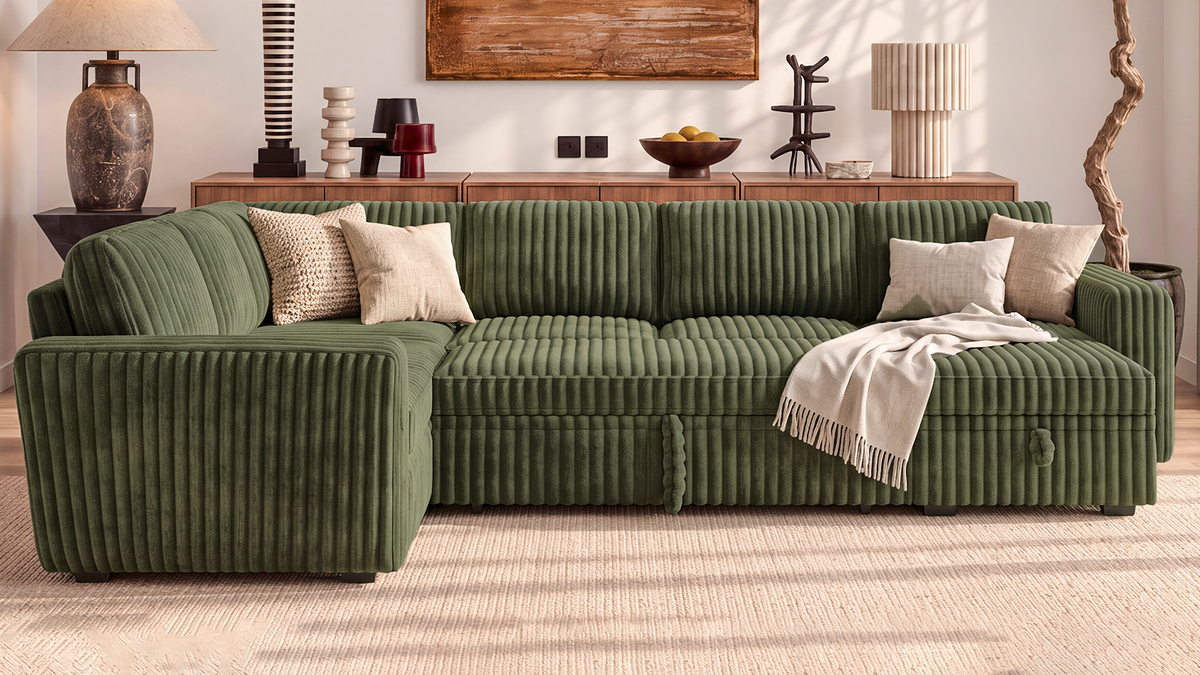
In the corduroy vs chenille sofa decision, corduroy is often the better fit for a busy living room when you like visible texture and can keep up with regular vacuuming. Chenille can feel smoother and may make light surface marks less obvious, but its soft pile still needs gentle care. The better fabric is the one whose texture, cleanup routine, and wear pattern suit the people and pets using the sofa every day.
Texture and Feel: What Ribs and Loops Actually Do Differently
Corduroy feels more structured under the hand, while chenille feels softer and more velvety. That difference starts with construction. Corduroy has raised parallel ribs, called wales. Chenille uses fuzzy yarn with a soft pile, so the surface reads more like a smooth, plush layer than a set of channels.
The first choice is visual as much as physical. Corduroy’s ribs catch light in bands and make a sofa feel casual, warm, and visibly textured. Chenille tends to look more even from across the room, although its pile can also shift in the light after someone sits down or brushes a cushion.
| Everyday Detail | Corduroy | Chenille |
|---|---|---|
| Surface look | Distinct raised ribs | Softer, more even pile |
| Hand-feel | Textured and cushioned | Smooth and plush |
| Light changes | Ribs create clear bands of shadow | Pile can show lighter and darker patches |
| Room presence | Casual and tactile | Softer and more streamlined |
Neither construction is a quality grade by itself. Fabric fiber content, backing, pile height, seam quality, and the way a cover is attached all affect how a finished sofa feels and performs. When shopping online, look for close-ups in daylight and normal indoor light rather than judging fabric from a single styled room photo.
Corduroy for a Textured Room
Choose corduroy when you want the upholstery to be part of the room’s character. Broad ribs make a large sofa look more relaxed and inviting, especially against plain walls or a simple rug. The same strong texture can compete with busy wallpaper, prominent wood grain, or several patterned textiles.
Corduroy also has a direction. Brushing the ribs one way may make a cushion look lighter, while brushing them the other way may deepen the color. That lived-in variation is normal, but it is worth deciding whether you enjoy it before the sofa becomes the most-used seat in the house.

Chenille for a Softer Visual Finish

Choose chenille when you want a plush touch without obvious ribs across every cushion. Its loops and fuzzy pile can make deep seats and rounded arms look softer, and the fabric may blend more quietly into a room with other patterns.
Chenille is not completely uniform, though. A crushed or brushed area can change shade because the pile lies in a different direction. Dark colors and taller pile often make that change easier to see, so examine several upholstery close-ups before treating chenille as a mark-free option.

Durability Under Daily Use
For daily use, a tighter, well-made version of either fabric matters more than the label corduroy or chenille. A sofa used for movie nights, reading, and family time will wear first at the favorite seat, front edge, arms, seams, and cushion corners. Those areas reveal the value of strong construction long before the fabric name does.
Corduroy can handle ordinary lounging well when the ribs and backing are firmly made. Its raised surface may flatten gradually in a heavily used spot, particularly with a deep pile or broad wale. Chenille’s soft yarn can also compress over time, and a loosely made chenille surface may catch more easily at an exposed loop.
Before committing, use the listing details and upholstery photos to check the parts that predict daily wear:
- Look for a close-up of the fabric at a seam, zipper, or cushion edge, where loose fibers are easiest to spot.
- Compare photos that show the upholstery before and after someone has sat on it, then note whether the pile direction stays visible.
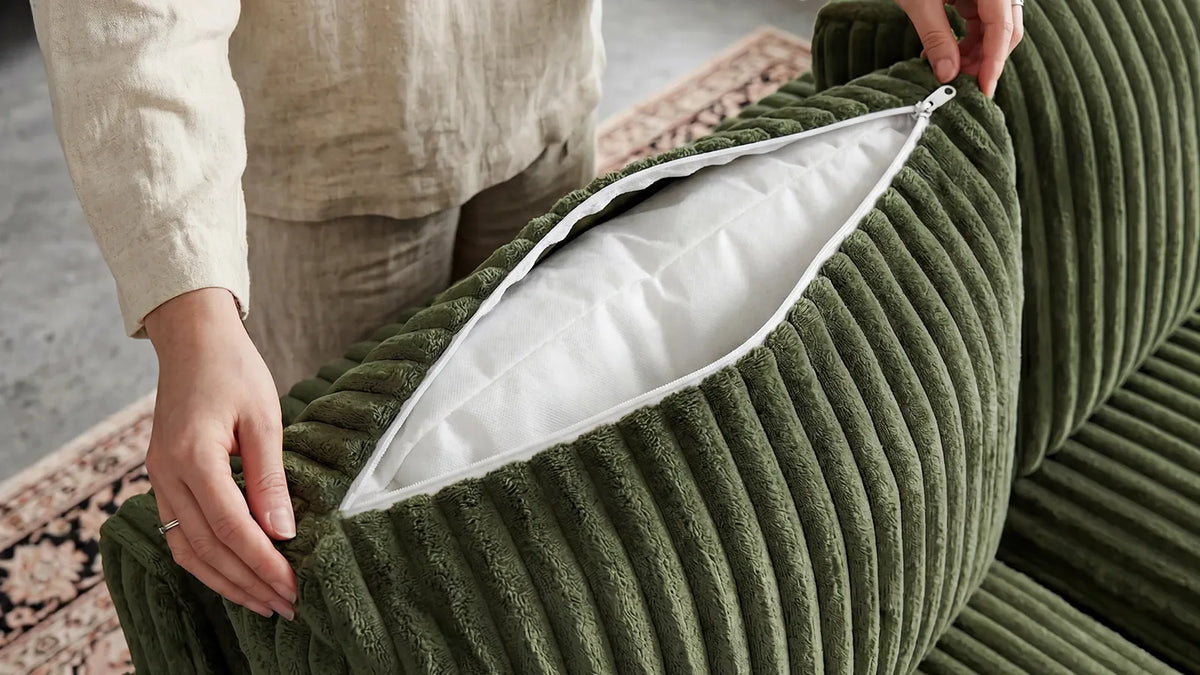
- Check whether seat covers, back covers, or cushion inserts can be rotated according to the care instructions.
- Ask whether the seller provides a specific upholstery care code instead of assuming a soft fabric can be cleaned with water.
This comparison gives a more useful answer than a generic durability claim. A dense corduroy can outlast a loose chenille, and a dense chenille can be the better choice than a thin, loosely backed corduroy. Start with construction, then select the texture you will enjoy maintaining.
Hiding Pet Hair, Scratches, and Everyday Wear
Chenille often looks tidier between cleanings, while corduroy can make lint and pile direction easier to notice. That does not mean chenille sheds pet hair more easily or corduroy resists every scratch. Color, pet coat type, nail condition, and the fabric’s weave all change the result.
Pet Hair and Lint
Match the fabric color to the pets that share the room before you decide between textures. Light fur on a charcoal sofa and dark fur on a cream sofa will be visible on either fabric. Corduroy’s channels can trap loose hair until it is vacuumed, but the rib pattern may make a quick pass with an upholstery attachment effective.
Chenille’s pile can let hair sit on the surface at first, especially when the pile is short, but static and texture may still make removal more involved. Review unfiltered upholstery photos and customer images when available. Those details are more useful than calling either material universally pet-proof.

Claws, Snags, and Flattened Seats
Keep nails trimmed and give pets a throw or designated bed when claw marks are a concern. Corduroy ribs can show a pulled thread or a flattened path if claws catch the raised pile. Chenille can snag too, particularly when its soft yarn forms exposed loops.
For both fabrics, avoid picking at a pulled fiber or shaving the pile. Photograph the spot, check the care information, and ask the seller or a qualified upholstery cleaner how to handle it. Rotating cushions, when the manufacturer permits it, also spreads the pressure that makes one seat look older than the rest.

Cleaning and Care Routines Side by Side
Both fabrics stay more presentable when spills are blotted quickly and dry debris is removed before it gets worked into the pile. The important difference is technique. Corduroy needs attention along the direction of its ribs. Chenille needs a light hand so rubbing does not mat or distort the soft surface.
| Care Task | Corduroy | Chenille |
|---|---|---|
| Weekly debris removal | Vacuum gently along the ribs | Vacuum gently with an upholstery attachment |
| Fresh spill | Blot, then follow the care code | Blot, then follow the care code |
| After spot cleaning | Brush ribs lightly in their direction if permitted | Let the pile dry, then restore it gently if permitted |
| Avoid | Hard scrubbing across the ribs | Rubbing, aggressive brushing, and excess moisture |
The care code controls the cleaner, not the fabric nickname. A removable cover is not automatically machine-washable, and water can leave a ring or change the pile on fabrics that require another method. Test any approved cleaner on an unseen area first and do not saturate a cushion insert.
For a broader look at upholstery checks before ordering, see our modular corduroy sofa care article. Use the instructions attached to the exact sofa as the final authority, because covers with similar-looking fabrics can have different backing and cleaning requirements.
Which Fits a Busy Living Room Better
Pick corduroy if you enjoy a relaxed, ribbed texture and can accept that the sofa may show its daily life. Pick a chenille sofa if a softer, smoother appearance matters more and you are prepared to treat snags and spills gently. Families with children and pets should make the decision from their routine, rather than trying to find a fabric that removes every maintenance task.
Use this quick decision check before ordering:
- Pick corduroy when you want the room to feel tactile and casual, and visible pile shifts will not bother you.
- Pick chenille when you prefer a softer surface and less obvious rib pattern from across the room.
- Choose the color after comparing it with pet hair, throws, flooring, and the room’s usual lighting.
- Confirm the care code, cover instructions, and close-up fabric photos before treating either option as easy to clean.
- Review close-up photos, material specifications, and care instructions before deciding whether a fabric’s texture and upkeep suit your household.
The right choice should feel manageable on a busy Tuesday, not only look good in the showroom photo. If your household will vacuum regularly and appreciates a visible woven texture, corduroy is a strong everyday option. If you prefer a quieter plush surface and careful spot care fits your routine, chenille may suit the room better.
Compare Your Fabric Routine Before You Order
Corduroy and chenille can both work in an active home. Focus on construction, color, pet habits, and the cleaning method you will actually use. We invite you to compare fabric close-ups in your own lighting, ask for care details, and explore our modular corduroy seating when its textured feel suits your everyday living room.
Common Questions About Corduroy and Chenille Sofas
Q1: Is corduroy or chenille more durable for daily use?
Neither fabric wins in every case. A tightly constructed, well-backed fabric with sound seams is the better daily-use choice, whether it is corduroy or chenille. Check the exact sofa’s fabric close-up, care code, and cushion construction because those details affect wear more than the fabric label alone.
Q2: Which fabric hides pet hair and scratches better, corduroy or chenille?
Chenille may look smoother between cleanings, but neither fabric reliably hides every pet issue. Fur visibility mainly follows color contrast, while scratches depend on claws and weave construction. Review fabric close-ups alongside the colors already in your room, and keep nails trimmed to reduce the chance of pulled fibers.
Q3: Is chenille harder to clean than corduroy?
No, but it needs a different touch. Chenille should be blotted and handled gently to protect its pile, while corduroy benefits from cleaning in the direction of its ribs. The upholstery care code determines which cleaner is safe for either fabric.
Q4: Do corduroy and chenille sofas feel warmer than flat woven upholstery?
Usually, yes. Their raised pile creates a softer hand-feel that many people experience as warmer than a smooth, tightly woven cover. Actual temperature comfort also depends on room temperature, clothing, cushion fill, and the fabric’s fiber blend.
Q5: What should I check when buying a corduroy or chenille sofa online?
Start with close-up upholstery photos, full-room images, material specifications, and care instructions. Compare several lighting conditions when the listing provides them, then look for customer images that show the pile after use. Those checks cannot predict every detail, but they can reduce surprises about texture and surface appearance.

Leave a comment
This site is protected by hCaptcha and the hCaptcha Privacy Policy and Terms of Service apply.