

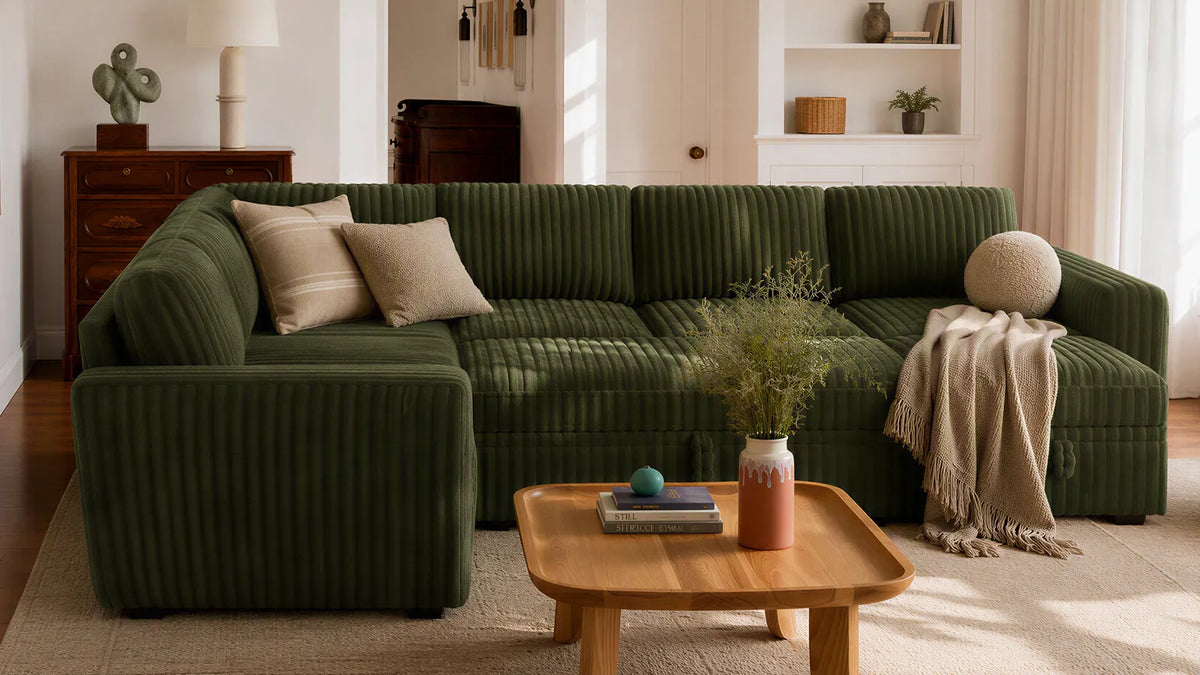
Yes, if you are choosing between sofas, rib size is a buying decision rather than a small fabric detail. Wide wale gives a sofa a larger, softer, more casual look and makes signs of use easier to see. Fine rib looks quieter and more tailored. Start with the look you want at home, then check the listing photos, available fabric close-ups, and care instructions for the upkeep you are willing to accept.
The Difference Is the Rib Count and Width
Rib size tells you how strongly the upholstery will shape the sofa’s look. In a wide-wale vs fine-rib corduroy comparison, wide wale has fewer, broader raised channels across each cushion. Fine rib has many narrower channels, so the surface looks smoother from a few feet away.
That distinction will not tell you whether a sofa is deeply cushioned, supportive, or durable on its own. Those answers come from the seat construction, upholstery fiber, pile height, and frame details in the listing. Rib size tells you what you will see every time you walk into the room.
| What You Are Comparing | Wide Wale | Fine Rib |
|---|---|---|
| First impression | Bold, plush-looking, casual | Subtle, tidy, tailored |
| Best visual setting | Large or plain rooms | Smaller or visually busy rooms |
| Signs of sitting and brushing | More noticeable | Usually less noticeable |
| Cleaning feel | Debris is easier to spot | Close channels may hold lint |
Treat these as trade-offs, not quality grades. A well-made sofa can use either texture well. The right one is the version whose visible texture still appeals to you after the novelty of the product photo wears off.

What Listing Photos Can Tell You About Corduroy Texture
Before you fall for the room photo, inspect the upholstery close-ups and every photo that shows an occupied seat. Product styling can make both textures look more even than they will look after a week of movie nights, so you need images that reveal scale, direction, and pile.
Look for Rib Scale Against Familiar Objects
Use a throw pillow, arm width, hand, or remote control in the photo as a rough size reference. If each rib is plainly visible beside a standard pillow, it will read strongly in your room too. If the ribs blur together until you zoom in, the sofa will likely deliver corduroy warmth without becoming the room’s main pattern.
This check is especially useful online because “plush,” “wide,” and “fine” are not standardized measurement labels. Two sofas described with the same word can show very different-sized channels in close-up photography.
Look for More Than One Lighting Condition
Check whether the listing includes a close-up in daylight and a wider room shot. Corduroy is directional, meaning the pile can look lighter or darker when it is brushed or viewed from another angle. A single heavily edited studio photo cannot show you how the fabric will react to a window, lamp, or overhead light.
If only one polished photo is available, ask for an unfiltered close-up or additional photos of the upholstery. Compare those images with photos of your rug and wall, then look for a view that shows the pile after someone has sat on it. That small test answers a buyer’s real question: will this texture look intentional in my room after people sit on it?

How Texture Changes the Scale of a Sofa
The same sofa footprint can look noticeably different once rib size enters the picture. Wide ribs visually enlarge cushions and arms, while fine ribs let the shape of the sofa, rather than the upholstery pattern, lead the room.
When Wide Wale Makes Sense
Choose wide wale when the sofa needs to bring warmth and presence to a plain or spacious room. It can make a low, deep sectional look cozier and less formal, which suits rooms with smooth walls, simple window treatments, and a restrained rug.
Pause before selecting it if your room already has several strong patterns. A bold rug, patterned wallpaper, visible wood grain, and broad corduroy channels can compete rather than layer. You do not need an empty room, but it helps to decide which item should be the main visual texture.
When Fine Rib Makes Sense
Choose fine rib when you want the sofa to blend into a more decorated room or a smaller apartment. It still gives you a warm, tactile surface, but it is less likely to make a large sectional feel visually heavy near a patterned rug, gallery wall, or open kitchen.
Fine rib can also suit buyers who like corduroy’s hand-feel but dislike a strongly casual look. It does not turn a relaxed sofa into a formal one, yet it lets cleaner lines and tailored cushions show more clearly.

Softness, Shadow, and Visible Pressure Marks
Do not buy either texture expecting a permanently uniform cushion surface. Both can show a change in pile direction after someone sits down, rests an arm, or brushes the fabric. Wide wale generally makes those changes more obvious because its ribs and channels create larger bands of shadow.
What You Will Notice After Daily Use
If a sofa is going in the main family room, imagine its most-used seat after a weekend. Wide wale may show where people were sitting or where a blanket lay. Many buyers like that soft, lived-in character. Others see it as a constant cue to smooth the cushion.
Fine rib can make a brushed area look less dramatic, although dark colors and a deep pile may still show light and dark shifts. The useful question is not “Will it show marks?” It is “Will I find those marks charming, neutral, or annoying?” Answer that before checkout, because no fabric label can answer it for you.
What Softness Actually Depends On
Do not use rib width as a shortcut for seat comfort. A plush hand can come from pile height, yarn, backing, and the padding beneath the cover, review the sofa’s cushion description and upholstery close-ups, and sit on the exact model if you can.
This is where buyers can separate appearance from performance. Select wide or fine ribs for the visual effect you want, then judge comfort and support from the information that actually describes the seat.
Where Dust and Crumbs Actually Collect
Rib size changes what maintenance looks like, but neither option eliminates it. Loose crumbs, lint, and pet hair settle at the base of the channels and in the gaps between cushions. Wide ribs often make debris easier to see. Fine ribs may look cleaner at a glance while holding lint in closely spaced channels.
Before you buy, ask the seller or check the care label for these practical details:
- The upholstery care code and the cleaners it permits.
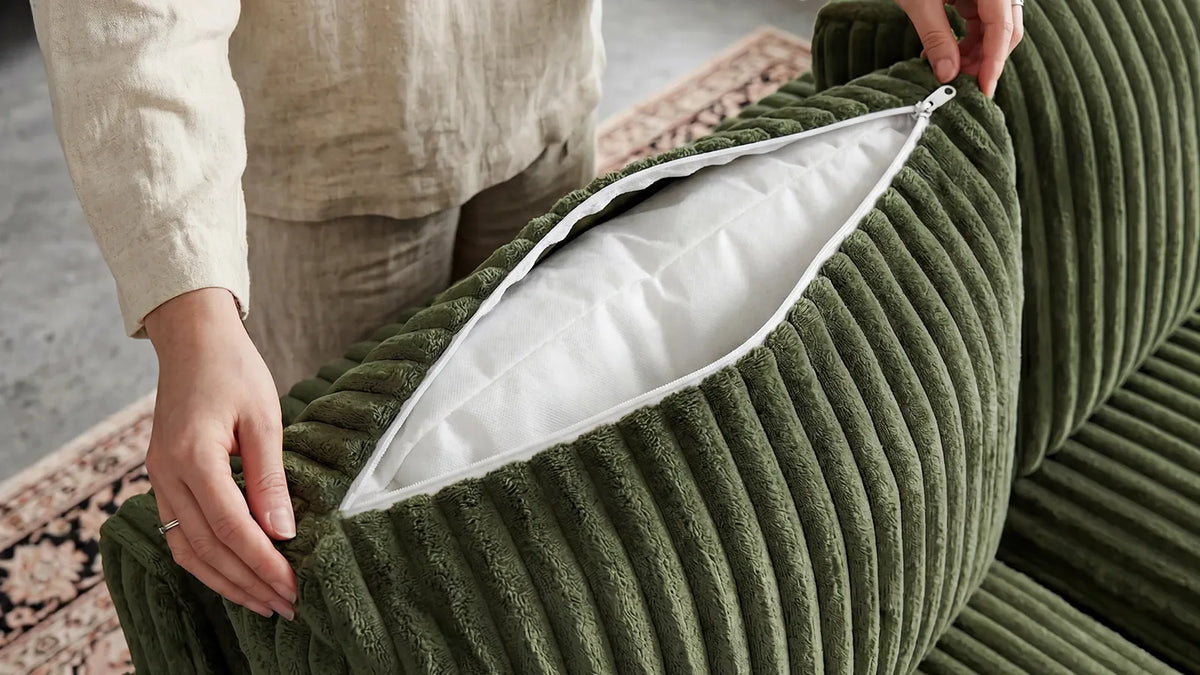
- Whether seat and back covers are removable, and whether they are actually machine-washable.
- Whether the listing shows the upholstery from more than one angle, including a close-up of the pile.
- Whether your usual upholstery attachment can reach the seams and cushion gaps.
Then match the fabric to your real routine. A household that eats on the sofa, has shedding pets, or dislikes vacuuming upholstery will notice the difference more than a low-traffic sitting room will. Vacuum in the direction of the ribs, use the care code before adding moisture, and avoid hard scrubbing that can flatten the pile.
For care instructions beyond the buying decision, see our corduroy sofa buying and care article. It covers care codes and cleaning steps without treating all removable covers as machine-washable.

Make the Call Before You Buy
Pick wide wale when you want the fabric to be a visible part of the sofa’s appeal and you are comfortable with a more relaxed, changeable surface. Pick fine rib when you want corduroy softness with less pattern at room distance and fewer obvious brushed marks between cleanings.
Use this short pre-purchase check before committing:
- View a close-up and a full-room photo, then decide whether the rib size suits the scale of your space.
- Compare the sofa's close-up and full-room images with photos of your rug, wall color, and major wood finishes. Look for more than one lighting condition or a photo that shows the pile after use.
- Brush the swatch in both directions under daylight and your evening lamps.
- Read the upholstery care code and cover instructions before assuming a spill will be easy to handle.
- Base the final comfort decision on the cushion and seat details, not the size of the rib.
That sequence prevents a common online-furniture regret: selecting the right color and silhouette, then realizing the fabric reads far more casual, more marked-up, or more demanding than the listing suggested.
Compare Texture Before Ordering
Rib size matters because you will live with its visual scale and everyday upkeep long after the first impression. An honest close-up, a full-room image, and a care-code check make the choice much clearer than a styled product image alone. When you are ready to compare corduroy sectional options, we invite you to start with the texture that works with your room and routine.
Common Questions About Corduroy Wale and Texture
Q1: Can I tell corduroy wale width from an online product photo?
Usually yes, when the listing includes a close-up beside a familiar object or a full cushion. Compare the ribs with a pillow seam, arm width, or hand instead of relying on words such as “plush.” If the scale is still unclear, request an unfiltered close-up before ordering.
Q2: Is fine-rib corduroy the same thing as pinwale?
Usually yes. Pinwale commonly describes corduroy with very narrow, closely spaced ribs. The terms are not used identically by every seller, so a close-up photo is more reliable than the label alone.
Q3: Does a larger wale make a sofa feel softer to sit on?
No. A larger wale may feel more pronounced under your hand, but seat softness comes mainly from the pile, fabric construction, cushion fill, and support below the cushion. Read the seat details separately before treating a rib size as a comfort promise.
Q4: Which corduroy texture is easier for homes with pets?
Neither is automatically easier. Wide ribs can make shed hair easier to see and remove, while fine ribs can make the surface look tidier between cleanings, check the care code and upholstery close-ups, and choose the routine you will realistically maintain.


Leave a comment
This site is protected by hCaptcha and the hCaptcha Privacy Policy and Terms of Service apply.