

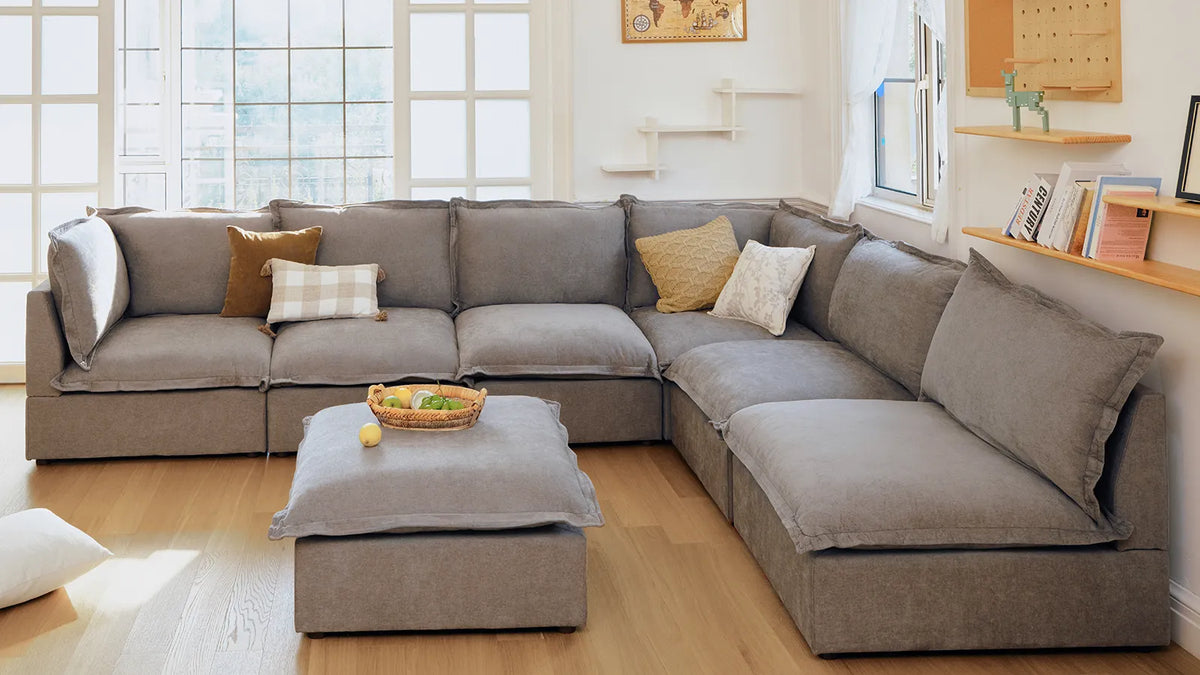
A standard vs oversized sectional decision comes down to usable room, not the photo’s apparent scale. An oversized sectional usually adds width, depth, or both. Compare the closed footprint, the seats you can truly use, and the open-bed space before treating “oversized” as a comfort upgrade.
The Size Difference in One View
An oversized sectional is not one fixed size. It is a larger version of a comparable layout, and the extra inches may sit in the arms, seats, chaise, or number of modules. That is why a regular size modular sectional can look close to an oversized option online while needing far less room at home.
Start with three numbers from each listing: overall width, overall depth, and height. Then mark those measurements on your floor with painter’s tape. The outline reveals whether the added size lands in a blank corner or across a route you use every day.
| Measurement | Standard-Size Starting Point | Oversized Starting Point | Why It Matters |
|---|---|---|---|
| Overall width | Fits the intended wall with room at both ends | May span most of the wall or extend into an opening | Determines whether the sectional dominates the room |
| Overall depth | Leaves room for a coffee table and a main path | Can push the front edge toward the center of the room | Changes circulation and table placement |
| Module count | Uses fewer or narrower sections | May use wider modules, more modules, or both | Affects seating and delivery pieces |
| Open sleeper depth | Requires a temporary clear zone | Often needs a deeper clear zone | Decides whether the bed can open without moving everything |
The table gives you a comparison method, not a universal cutoff. Two models with the same width can have very different depths, and an L-shaped layout can feel larger or smaller than its dimensions suggest depending on where the chaise sits.

Compare Like for Like
Compare an L-shape with an L-shape, or a U-shape with a U-shape. A straight sofa with an ottoman may be easier to place than a chaise sectional of the same listed width because the ottoman can move when the room needs open floor.
Usable Seat Space vs. Total Footprint
More outside width does not automatically mean more comfortable seating. Wide arms, thick back cushions, a fixed chaise, and gaps between modules all occupy space that the overall measurement does not explain.
Check the inside seating width and the number of adult-sized sitting positions. If the oversized option gains 20 inches in overall width but only adds one narrow seat, that extra footprint may be serving the arms or a deeper corner rather than your household.
Count Seats by How People Sit
Count the spots that can support a person sitting upright, not every cushion shown in the photo. A corner is often great for one person curling up but less useful for two people sitting side by side. Likewise, a chaise is excellent for stretching out, yet it may not replace a conventional seat during a gathering.
Use this quick test when comparing configurations:
- Measure the inside width between the arms.
- Identify the seats used during a normal evening.
- Identify the extra seats needed for movie night or guests.
- Decide whether a movable ottoman can cover the occasional extra place.
That distinction prevents a large sectional vs standard sectional comparison from becoming a contest of the biggest outside number. The better choice is the one whose useful seats match the people who use the room most often.
Watch the Space Between the Sofa and Table
A large sectional can bring the coffee table uncomfortably close, especially when its deeper seats move the front edge toward the center of the room. Leave enough space to stand up, walk through, and reach the table without bumping knees.
If the table becomes too far away after you preserve a walkway, the seat depth may be the real issue. A slightly smaller footprint with a better table relationship often feels easier to live with than a larger sofa that turns the middle of the room into dead space.

Deeper Seats and Wider Modules
Seat depth changes the way a sectional feels more than a listing photo can show. Deep seats suit lounging and long legs, while a shallower seat usually makes it easier to sit upright with back support. Neither is automatically better for every person or room.
Measure seat depth from the front edge of the seat cushion to the back cushion where you actually lean. Overall depth includes the back, frame, and cushions, so it cannot tell you by itself how the seat will feel.
Deep Seats Change Daily Posture
Choose a deeper seat when the household usually reclines, curls up, or shares the sofa for long movie nights. The extra depth can make an oversized sectional feel more relaxed, but shorter users may need a lumbar pillow to avoid sitting too far from the back cushion.
Choose a moderate depth when the sofa doubles as a reading, work, or conversation seat. Feet that reach the floor and a supported back make it easier to use the sectional for more than lounging.
Wider Modules Change the Layout
Wider modules can reduce visible seams and make each seat feel less confined. They can also make a corner harder to turn through during delivery and leave fewer rearrangement options later.
Ask for the individual module dimensions, even when you already know the total size. For a modular sectional, the largest single piece often matters more for a staircase or elevator than the finished sofa’s total width.

Dimensions Once the Sleeper Is Open
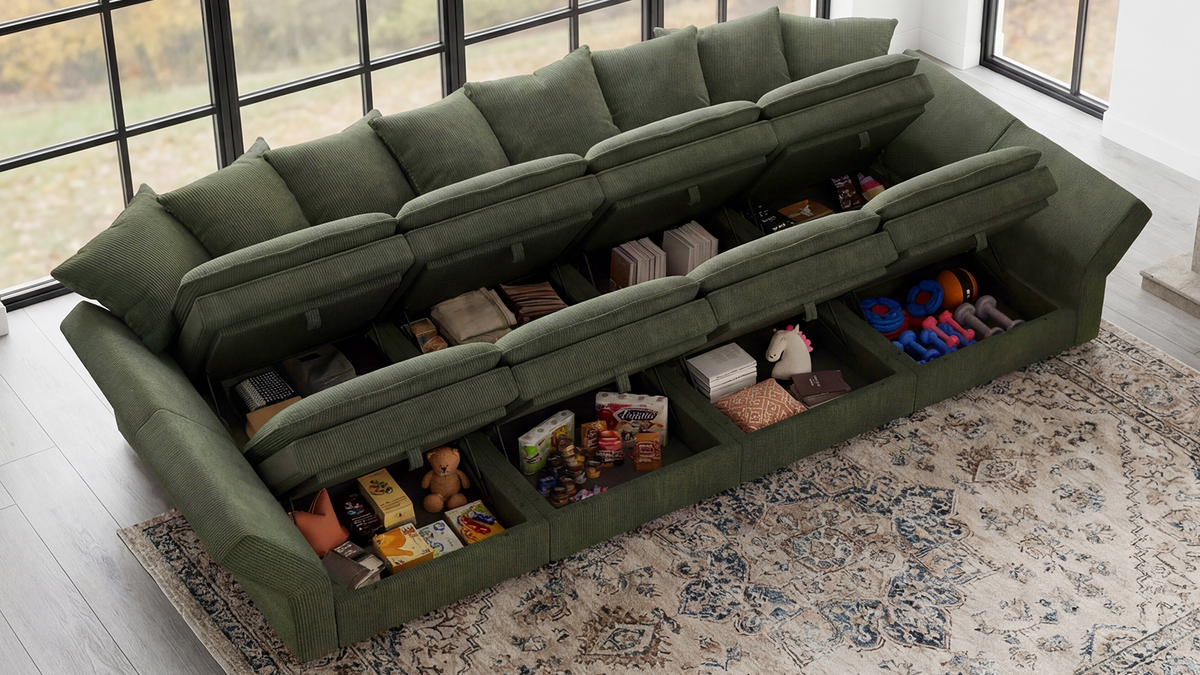
An oversized sleeper sectional needs to be measured in two states: closed for everyday living and open for overnight use. The open-bed depth can reach well past the normal front edge, so a layout that feels generous by day may block the room at night.
Record the distance from the back wall to the front edge when closed, then add the published pull-out extension. Mark that full depth with tape before ordering. Include the space needed to pull the mechanism forward and a route around the sleep surface.
Make a Guest-Night Floor Plan
Move or mark the coffee table, ottoman, pet bed, and any floor lamp that sits within the opening path. A sleeper works best when converting it does not require lifting heavy furniture into another room.
Check these points in the open layout:
- The sleeper can extend without hitting a table, door, or media unit.
- A guest can get in and out from at least one side.
- Doors and drawers still open where needed.
- The route to the bathroom remains clear at night.
The open plan is often the deciding factor between a standard and oversized sleeper sectional. If an oversized setup forces a full-room reset for every guest, its added lounge space may not be worth the tradeoff.
Treat Published Dimensions as a Starting Point
Listings may show overall sofa dimensions separately from the open sleeper dimensions. Read diagrams, configuration notes, and included-piece lists together, especially when photos show an ottoman or chaise that may not be part of the pull-out surface.
If an open measurement is missing, ask before buying. Do not estimate it from a lifestyle photo, because camera angle can hide the distance from the sofa back to the end of the bed.
Delivery Access and Future Moves
The total footprint affects the room, but the largest box or module affects delivery. A modular oversized sectional can be easier to carry than a one-piece sofa, yet every individual piece still has to clear the narrowest doorway, hallway turn, stair landing, and elevator opening.
Measure those access points before purchase, including trim, handrails, and the turn at the end of a hall. Compare the clear opening with the packaged dimensions and the dimensions of the largest unboxed module if both are available.
Measure the Route, Not Only the Front Door
Start at the curb or building entrance and follow the same route a delivery team will use. Note every pinch point, including gates, porch turns, apartment corridors, stair ceilings, and elevator depth.
For future moves, save the assembly instructions and module dimensions with your order records. A sectional that is easy to place today can still be difficult to move if its heaviest or widest component does not suit the next home’s access route.

Map the Room Before You Compare Sectionals
Choose standard size when it preserves a clear route, useful coffee-table reach, and an open sleeper plan with little furniture moving. Choose oversized when the room has the depth to support deeper seats and wider modules without sacrificing those basics. After you have a taped floor plan, compare the available pull-out sectional collection by closed dimensions and open-bed measurements.
Frequently Asked Questions About Sectional Sofa Size
Q1: How much room should be left around a sectional sofa?
Leave a clear main path that lets people pass without brushing the sofa or moving furniture. The exact amount depends on the room and local accessibility needs, but a route should remain usable when people are seated and when doors or drawers open nearby.
Q2: Is an oversized sectional a bad choice for a small living room?
No, provided the room has enough depth and an uninterrupted wall for it. A small room can sometimes hold a larger sectional better than several separate pieces, but the taped floor test should still leave a practical entry route and a place for the sleeper to open.
Q3: Do deeper sectional seats work for shorter people?
They can, especially with a back pillow for support. Test whether you can sit back without your legs feeling unsupported, because the comfort of a deep seat depends on body height, cushion firmness, and the back cushion’s thickness.
Q4: Can a modular sectional be made smaller later?
Often, but only if the collection offers compatible individual pieces and the connectors support the new arrangement. Check the current configuration rules and module availability before treating future downsizing as certain.
Q5: Should I measure a sectional with the cushions on or off?
Measure the finished sofa with cushions in their normal position for room planning. If delivery is the concern, also request the frame, module, and packaged measurements, since those are the dimensions that need to pass through your home.


Leave a comment
This site is protected by hCaptcha and the hCaptcha Privacy Policy and Terms of Service apply.